
The retail sector is the engine room of the national economy, employing roughly 3 million people across high streets, retail parks, and e-commerce fulfilment centres. However, it is also an industry built on precarious foundations: volatile consumer footfall, tight profit margins, and a heavy reliance on part-time, shift-based, and minimum-wage labour. According to recent industry benchmarks, average retail staff turnover frequently exceeds 50% annually, and the Low Pay Commission estimates that hundreds of thousands of retail workers are paid precisely at the legal minimum wage threshold.
For HR professionals managing retail workforces, the compliance landscape has just undergone a notable shift. Following the Royal Assent of the Employment Rights Act 2025 (ERA) on 18 December 2025, the UK government has fundamentally rewritten the rulebook on workers' rights. With major provisions taking effect throughout 2026 and early 2027, the era of relying on hyper-flexible, easily disposable labour is over.
If your retail HR department is not strictly compliant with this incoming wave of legislative changes (ranging from day-one sick pay to the abolition of the unfair dismissal compensation cap) you are not just risking higher operational costs. You are actively exposing your brand to uncapped employment tribunal claims, severe financial penalties from the soon-to-be-established Fair Work Agency, and devastating reputational damage.
This comprehensive guide breaks down the critical employment laws every UK retail HR professional must understand right now, offering practical, store-level insights to help you navigate compliance, protect your margins, and foster a high-performing sales floor.
Key Takeaways
- Minimum wage increases will impact your entire pay structure, not just entry-level roles: The April 2026 National Living Wage increase to £12.71 for workers aged 21 and above will create wage compression across retail organisations. HR teams must reassess supervisor and middle-management pay bands to ensure these roles remain financially attractive and that responsibility levels are properly reflected in compensation.
- Compliance with working time rules is more important than ever: Practices that seem minor, such as unpaid pre-shift briefings, security bag checks, or uniform deductions, can easily push employees’ effective pay below the legal minimum wage. HR must review store-level operational practices and ensure all mandatory activities are counted and compensated as working time.
- Sick pay reforms will increase employer responsibilities: With Statutory Sick Pay becoming a day-one right and the removal of the Lower Earnings Limit, a significantly larger portion of the retail workforce will now qualify for sick pay. HR teams must prepare for higher short-term absence costs while strengthening absence management processes such as return-to-work interviews and accurate payroll calculations.
- Zero-hours contract practices must evolve: Retail businesses can no longer rely on indefinite “casual” labour arrangements. Workers who consistently work regular hours must now be offered guaranteed-hour contracts, and employers must provide reasonable shift notice and compensation for cancelled or curtailed shifts. Workforce planning and scheduling will need to become far more data-driven and predictable.
- The unfair dismissal landscape is becoming far riskier for employers: From January 2027, employees will gain unfair dismissal protection after just six months of service, and compensation caps will be removed. This means poorly managed dismissals could lead to substantial tribunal awards. HR must implement structured probation processes, consistent performance documentation, and stronger managerial training to mitigate this risk.
- Employers now carry greater responsibility for protecting staff from customer behaviour: Retail businesses have a proactive legal duty to prevent third-party harassment, including abuse from customers or vendors. HR teams must introduce preventive measures such as staff training, visible deterrent signage, clear reporting systems, and policies that empower employees to disengage from abusive customers.
- Family-friendly rights are expanding from day one: Paternity leave and unpaid parental leave are now immediate entitlements, and protections for pregnant employees and returning mothers have been significantly strengthened. HR policies, onboarding processes, and redundancy procedures must be updated to reflect these expanded protections.
- A new enforcement authority will increase regulatory scrutiny: The Fair Work Agency (FWA), launching in April 2026, will have enhanced powers to investigate wage, holiday pay, and sick pay compliance. Payroll accuracy and documentation will become critical, as enforcement will be faster, stricter, and more visible.
Written Terms and Contracts of Employment
Under the Employment Rights Act 1996, most employees and workers must be given a written statement of employment particulars:
- Within the first five days of starting work, or
- A full contract if one isn’t provided initially.
This must include pay, working hours, holiday entitlement, notice periods, and other critical terms. Failing to do so can lead to employment tribunal claims and fines.
Retail HR teams should regularly review contracts, especially for part-timers and seasonal staff, ensuring they reflect actual working patterns, pay bands, and any other terms.
Anti-Discrimination and Harassment Protections
Under the Equality Act 2010 and subsequent amendments like the Worker Protection (Amendment of Equality Act 2010) Act 2023, employers must prevent discrimination and harassment. These laws protect workers based on protected characteristics such as age, sex, race, disability, religion, and sexual orientation.
Importantly, new reforms are strengthening obligations to prevent harassment, especially sexual harassment, and expanding employer liability for third-party conduct. More details about this will be discussed in subsequent paragraphs.
HR teams should:
- Maintain clear anti-harassment policies
- Train managers and staff
- Investigate complaints promptly and fairly
Protection from Unlawful Deductions and Wages Law
Workers are protected from unlawful deductions from wages. Employers may only make deductions that are:
- Required or permitted by law
- Agreed in the contract
- With proper notice to the employee
Any deduction outside those categories can lead to claims and tribunal awards.
Flexible Working Rights
Since April 2024, Flexible Working Requests are a day-one right for employees. This means that from the first day of employment, staff can request flexible working arrangements (e.g., variable start times, compressed hours), and employers must respond within two months and consult before refusing.
Action for HR:
Update your flexible working policy and train managers on how to handle requests promptly.
Interesting Read: Average Salary for Retail Jobs in the UK
Working Time Regulations (Rest and Break Rights)
Retail workers are entitled to various rest rights, including:
- 20-minute uninterrupted breaks during shifts of 6 hours or more
- 11 hours of daily rest between working days
- 24-48 hours of weekly rest each week or fortnight
HR teams must ensure rotas comply with these statutory rest rights, both to avoid legal penalties and to protect staff wellbeing.
Holiday Entitlement and Holiday Pay
Under UK law, workers (including part-timers) are entitled to 5.6 weeks of paid holiday per year, pro rata for part-time staff.
Holiday pay must be calculated fairly, reflecting normal earnings, including overtime or commission where applicable. HR must ensure holiday accrual and payments are legally calculated and documented.
Practical steps for HR:
- Calculate holiday entitlement pro-rata for part-timers
- Ensure holiday pay includes regular earnings elements
- Keep clear records of leave given and taken
Failing to do so has been the subject of frequent employment disputes, as workers sometimes raise claims for unpaid holiday entitlements, especially when they only discover rights after months on the job.
The Financial Baseline: The Forthcoming April 2026 National Living Wage Increase
The most immediate and universally felt legislative change affecting your payroll is the annual adjustment to the National Minimum Wage (NMW) and National Living Wage (NLW). Driven by the government's mandate to boost the earnings of the lowest-paid workers, the April 2026 increase will place significant financial pressure on retail operating models.
The Statutory Rates (Effective 1 April 2026)
The following statutory rates apply to pay periods covering 1 April 2026 onwards. HR teams must ensure payroll software is updated well in advance to prevent accidental underpayments.
| Age / Worker Category | April 2025 Rate | New April 2026 Rate |
| Age 21 and over (National Living Wage) | £12.21 | £12.71 |
| 18-20 Year Old | £10 | £10.85 |
| 16-17 Year Old | £7.55 | £8.00 |
| Apprentices | £7.55 | £8.00 |
HR Insights & Actions
- The Wage Compression Crisis: As the baseline rate rises to £12.71, the financial gap between an entry-level Sales Assistant and an experienced Floor Supervisor significantly shrinks. If your supervisors are only earning £13.20 an hour, the minimal financial bump wipes out their incentive to take on the stress of keyholder responsibilities, cash handling, and customer de-escalation. Retail HR professionals must conduct a holistic review of their entire pay architecture, not just the bottom tier, to ensure middle-management roles remain financially attractive.
- The "Working Time" Trap (Bag Searches & Briefings): In retail, it is common practice for staff to arrive 15 minutes early for a pre-shift huddle, or to wait 10 minutes after clocking out for a mandatory security bag search. Under HMRC rules, this constitutes working time. If your staff are paid exactly £12.71 per hour, those unpaid 10 minutes will drag their average hourly pay below the legal threshold. This triggers severe HMRC fines and public "naming and shaming." HR must either pay for this time or mandate that bag searches occur before the employee clocks out on the time and attendance system.
- Uniform Deductions: If you require retail staff to wear a specific uniform (e.g., black trousers and white shirts) that they must purchase themselves, the cost of that clothing is factored into their minimum wage calculation. If buying the uniform pushes their first month's pay below the NMW, your brand is breaking the law.
Statutory Sick Pay (SSP) Reform: The April 2026 Rollout
In the retail industry, part-time work is the standard. Students, parents, and semi-retirees often work 12 to 16 hours a week. Currently, workers earning below the Lower Earnings Limit (LEL) are entirely excluded from Statutory Sick Pay (SSP). Furthermore, those who did qualify had to wait three unpaid "waiting days" before receiving financial support.
However, under the Employment Rights Act 2025, this framework has been completely dismantled.
The New Rules (Effective 6 April 2026)
- Day-One Right: The three-day waiting period is officially abolished. SSP is now payable from the very first day of a qualifying sickness absence.
- Removal of the Lower Earnings Limit: The requirement to earn a minimum weekly threshold has been scrapped. This extends sick pay to hundreds of thousands of previously excluded low-paid and part-time retail workers.
- Percentage-Based Pay for Low Earners: Employees earning below the standard flat SSP rate will now receive a legally mandated percentage (set at 80%) of their normal average weekly earnings.
HR Insights & Actions
- Budget for Increased Absence Costs: With the financial penalty of the three-day wait removed, workers suffering from a genuine 48-hour cold will rightfully stay home to recover, rather than bringing illnesses onto the sales floor and infecting the rest of the team. HR must adjust labour budgets to account for a guaranteed increase in short-term sick pay payouts.
- Overhaul Absence Management Policies: Store Managers can no longer rely on unpaid days to deter casual absenteeism. HR must implement robust, supportive Return-to-Work (RTW) interview procedures. Every single absence, even a one-day call-out, must be followed by a documented RTW conversation. This ensures staff feel supported while simultaneously deterring the misuse of the new day-one sick pay right.
- Payroll System Audits: Ensure your payroll software vendor has updated their algorithms to automatically calculate the 80% rule for ultra-low earners by the first week of April 2026.
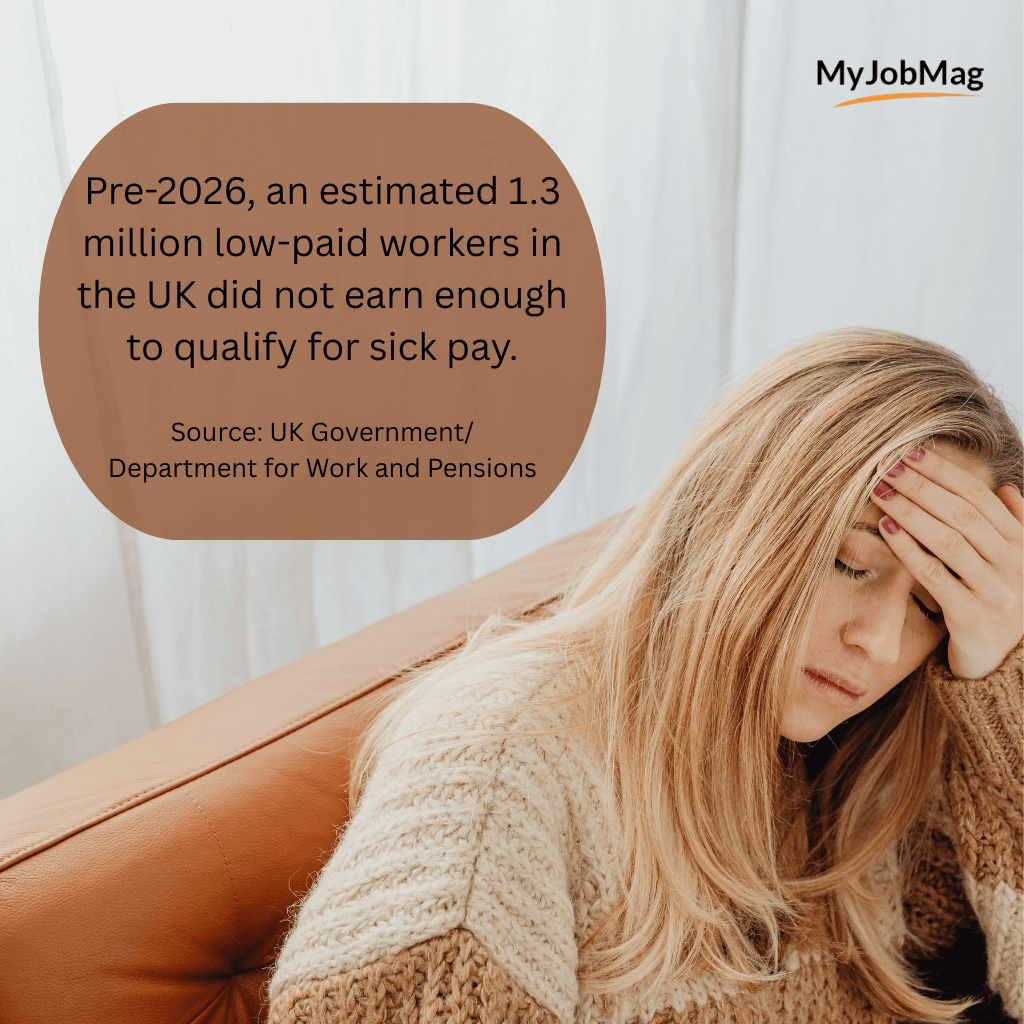
Pre-2026, an estimated 1.3 million low-paid workers in the UK did not earn enough to qualify for sick pay. The removal of the LEL brings a massive influx of part-time retail workers into the SSP system (Source: UK Government/Department for Work and Pensions).
Taming Zero-Hours Contracts & Shift Predictability
Zero-hours and highly variable contracts have long been the lifeblood of retail. They allow store managers to flex their workforce to match the highly volatile peaks and troughs of consumer demand, scaling up for Black Friday and scaling down during the quiet weeks of late January. However, the government has moved decisively to end what it terms "one-sided flexibility."
The Right to Guaranteed Hours
Under the Employment Rights Act 2025, employers are now subject to a strict new duty regarding zero-hours and low-hours workers.
- The Guarantee: If a retail worker works regular hours over a specific reference period (defined in the regulations, expected to be 12 weeks), the employer is legally obligated to offer them a guaranteed hours contract that accurately reflects their actual working pattern.
- Shift Cancellation Compensation: If a store is dead on a Tuesday afternoon and a manager decides to send three associates home two hours early to save on payroll, the employer must now provide proportionate financial compensation to those workers for the curtailed shift.
- Reasonable Notice: Workers on variable contracts now have the statutory right to receive "reasonable notice" of their shifts, ending the practice of posting the weekly rota on a Sunday evening for a shift starting Monday morning.
HR Insights & Actions
- Conduct a Workforce Data Audit Immediately: Do not wait for a tribunal claim to tell you your contracts are outdated. Pull the time and attendance data on all your zero-hours and casual staff from the last 12 weeks. How many of your "casual" weekend staff are consistently working 20 hours every single week? Under the new law, those individuals must be offered permanent part-time contracts reflecting those hours.
- Revamp Store Scheduling Practices: The days of reactive rostering are over. HR must work closely with Regional and Area Managers to forecast consumer demand better. Implement intelligent workforce management software that guarantees rotas are published at least two weeks in advance.
- Train Managers on Curtailed Shifts: Store managers must understand that sending staff home early is no longer a free cost-saving measure. It now triggers complex compensation calculations. Managers must be trained to utilise downtime effectively, tasking staff with stock takes, visual merchandising resets, or digital training, rather than simply cutting their hours.
Read Also: Top 7 Skills Every Retail Professional Should Have
The Unfair Dismissal Change: The 6-Month Window
For decades, UK employers possessed a highly forgiving two-year "safe harbour." If a retail assistant was simply not a good fit, perhaps they were perpetually late, had a poor attitude on the floor, or repeatedly failed to grasp the Point of Sale (POS) system, employers could dismiss them within the first 23 months without the risk of an "ordinary" unfair dismissal tribunal claim. That era is ending, fundamentally changing how retail businesses hire and fire.
The New Six-Month Qualifying Period
Taking effect for dismissals from 1 January 2027 (meaning HR must prepare and restructure probations throughout 2026), the qualifying period for standard unfair dismissal protection will drop drastically from two years to just six months.
The Removal of the Compensation Cap
In a massive concession to trade unions during the passage of the 2025 Act, the statutory cap on compensatory awards for unfair dismissal, which was previously set at the lower of 52 weeks' pay or a fixed statutory amount, has been completely removed. An employment tribunal can now award uncapped damages if they find a dismissal to be unfair.
HR Insights & Actions
- The Death of "We'll See How They Do": Retail managers often keep mediocre staff around simply to fill gaps in the rota, deciding a year later to let them go. You can no longer afford to let employees coast. HR must design rigorous, highly structured, and legally compliant probationary periods that conclude well before the six-month mark.
- Mandatory Performance Check-Ins: Implement mandatory 4-week, 8-week, and 12-week performance reviews for all new retail hires. If an employee is not hitting Key Performance Indicators (KPIs) such as Units Per Transaction (UPT) or customer service scores, it must be documented immediately. If you need to dismiss them at month five, you must have a paper trail proving they failed their probationary objectives.
- Managerial Upskilling: The single biggest financial risk to a retail business today is an untrained Store Manager firing an employee on the spot in the heat of a stressful Saturday shift. Because the cost of an unfair dismissal claim is now uncapped, line managers must be extensively trained in legal performance management, the issuance of formal warnings, and the absolute requirement to consult HR before terminating any contract extending past the six-month mark.
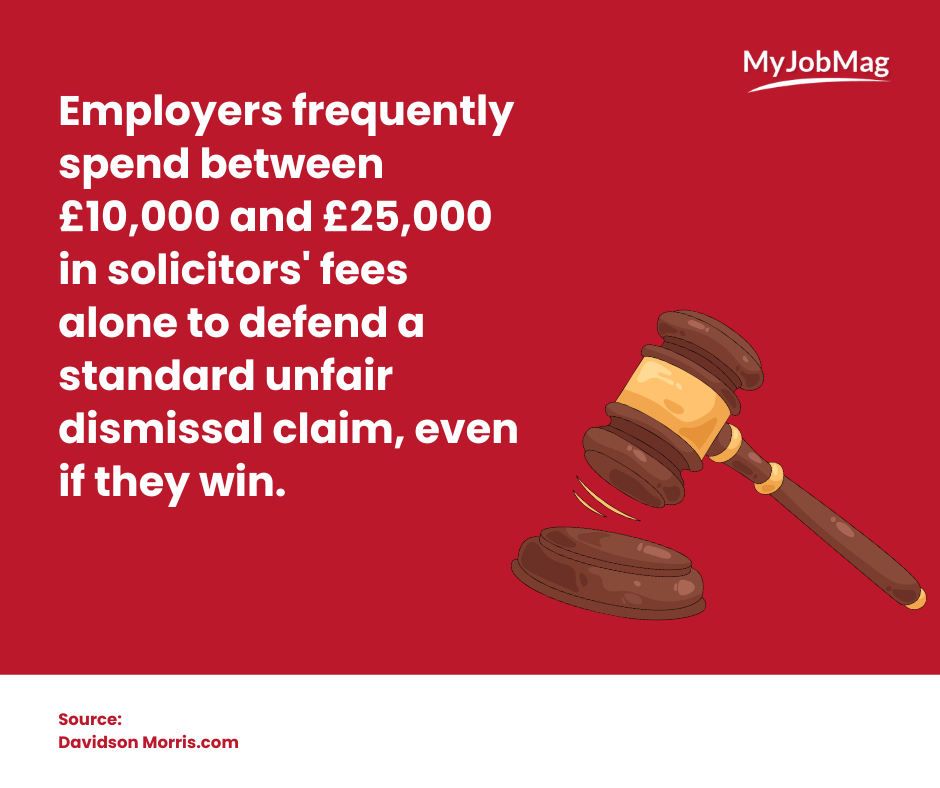
Defending an Employment Tribunal claim is a costly endeavour. Based on UK legal market estimates, employers frequently spend between £10,000 and £25,000 in solicitors' fees alone to defend a standard unfair dismissal claim, even if they win.
Protecting the Sales Floor: Third-Party Harassment Liability
Retail workers are uniquely vulnerable to abuse from the general public. Whether it is an aggressive shopper demanding an out-of-policy refund, a shoplifter turning violent when confronted, or a customer making inappropriate sexual remarks at the checkout till, the frontline retail worker takes the brunt of society's frustrations.
Historically, employers were rarely held liable for the actions of customers. The law has now closed that loophole.
The Proactive Legal Duty
Reinforced by the Worker Protection Act (which came into force in late 2024) and expanded under the ERA 2025, employers now have a strict, proactive legal duty to take "all reasonable steps" to prevent harassment in the workplace.
Crucially, this includes direct employer liability for harassment of staff by third parties, meaning customers, vendors, mall security, and delivery drivers. If a customer sexually harasses your cashier, and you cannot prove you took reasonable steps to prevent it, the employee can successfully sue the business.
HR Insights & Actions
- Shift from Reactive to Preventive: Having a standard grievance policy hidden in an employee handbook is no longer sufficient to defend your brand against a tribunal claim. You must proactively assess the risk of third-party harassment across your store portfolio.
- Visible Customer Deterrents: In retail, taking "reasonable steps" includes placing highly visible signage at entrances, fitting rooms, and checkouts explicitly stating that abuse, aggression, or harassment of staff will not be tolerated and will result in immediate removal and potential police involvement.
- Empower Your Frontline: Retail staff are often conditioned to believe "the customer is always right." HR must actively rewrite this narrative. Workers must be explicitly trained and authorised by management to walk away from abusive customers, safely refuse service, and escalate issues to security without fear of being reprimanded for "poor customer service."
- Create Safe Reporting Channels: Establish clear, confidential reporting mechanisms for staff to flag inappropriate behaviour from regular customers. If a specific customer repeatedly makes staff uncomfortable, store management must have HR support to legally prohibit that individual from entering the premises.
The British Retail Consortium’s (BRC) Annual Crime 2025 Survey highlights an epidemic on the sales floor. Incidents of violence and abuse against retail workers surged to roughly 2,000 incidents every single day in recent years, with the total cost of retail crime surpassing £4.2 billion annually.

Enhanced Family Leave & Day-One Rights
The retail workforce leans heavily female, and accommodating working parents is a vital part of talent retention. The Employment Rights Act 2025 significantly expands family-friendly rights, moving away from length-of-service requirements.
The Changes
- Paternity and Unpaid Parental Leave: These are now "day-one" rights. An employee no longer needs 26 weeks of continuous service to qualify for statutory paternity leave or unpaid parental leave.
- Enhanced Dismissal Protections: The Act introduces severe new restrictions on dismissing pregnant women, mothers on maternity leave, and mothers for up to six months after they return to work. Unless a business is in severe financial difficulty and closing a store entirely, dismissing a returning mother is now fraught with legal peril.
HR Insights & Actions
- Update Onboarding Procedures: New hires must be made fully aware of their day-one family leave rights during their initial store induction.
- Review Restructuring Plans: If your retail brand is undergoing a restructuring or laying off staff, HR must meticulously review the list of impacted employees. Pregnant workers and those returning from maternity leave now possess a highly elevated protected status. Any redundancy process involving them requires bespoke, iron-clad legal justification.
The Arrival of the Fair Work Agency (FWA)
To ensure these sweeping new laws are not ignored, the government is establishing the Fair Work Agency, which will become fully operational in April 2026.
This new body consolidates various existing enforcement arms (such as HMRC's minimum wage enforcement) and gives them unprecedented new powers. Most notably, the FWA will have the power to enforce holiday pay and Statutory Sick Pay compliance.
In retail, where holiday pay calculations for zero-hours workers are notoriously complex (often relying on the 52-week average reference period), minor payroll errors will no longer just be internal grievances; they will be subject to state-level investigation, severe fines, and public naming. Retail HR teams must conduct a full, independent audit of their holiday pay calculation mechanics before the FWA opens its doors.
Conclusion
The transformation of UK employment law throughout 2026 and 2027 is not merely a set of administrative updates; it represents a fundamental, cultural shift in how retail businesses must value and treat their workers. For an industry that has historically relied on cheap, hyper-flexible labour to buffer against tight profit margins, the financial and operational impacts are profound.
From managing the new financial realities of the £12.71 National Living Wage and tracking complex shift curtailments, to completely restructuring how store managers handle six-month probations and customer abuse, your HR department must evolve. You can no longer operate as a purely reactive, administrative function. Retail HR must become a proactive, strategic powerhouse, working hand-in-hand with operations to protect the business.
By auditing your current contracts, overhauling your probationary periods, and rigorously retraining your line managers today, you can insulate your brand from costly litigation and position your company as a secure, ethical employer of choice in an increasingly regulated labour market.

Staff Writer
This article was written and edited by a staff writer.

Leave a Comment