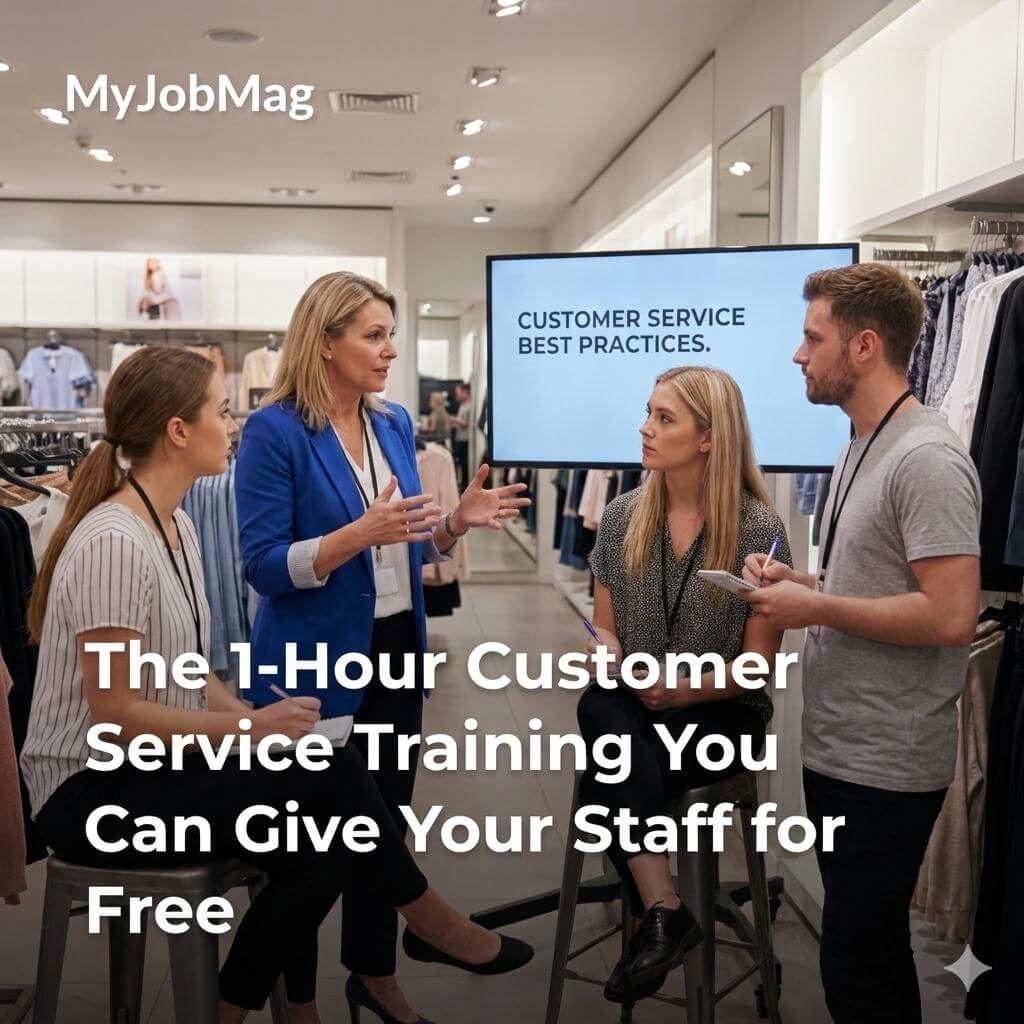
In the high-stakes world of retail, customer service isn't just a department; it's the entire battlefield. Consider this: According to research by PwC, 73% of customers say customer experience is an important factor in their purchasing decisions, and that 32% of customers will walk away from a brand they love after just one bad experience. Even more striking, customers are willing to pay up to 16% more for a better customer experience.
For hiring managers and store leaders, this presents both a crisis and an unparalleled opportunity. Your frontline staff are the single most powerful drivers of revenue and loyalty, yet they are often the least trained, equipped with little more than a point-of-sale system and a smile.
The traditional barriers to effective training are real: tight budgets, even tighter schedules, and the perceived complexity of designing a meaningful program. This leaves teams underprepared, managers overwhelmed, and customer connections missed. But what if you could fundamentally shift your team's service mindset and skill set in the time it takes for a lunch break? What if that training cost nothing but your focused attention?
This guide is that solution. It is a ready-to-deploy, one-hour training blueprint designed for immediate impact. We move past abstract theories into the concrete behaviours that turn a transaction into a relationship and a shopper into an advocate.
We encourage every hiring manager, store owner, and team leader not just to read this, but to share it directly with your teams, schedule the hour, and lead the session. The return on this single hour of investment (measured in customer satisfaction, increased sales, and reduced stress) will be immediate and profound. Let's begin.
This training is structured into six focused modules, each lasting 10 minutes.
Total training time: 60 minutes.
Trainer Objective
Help staff understand what customers actually want today, not what the business thinks customers want.
Key Message to Staff
Customers don’t come to your business just for a product or service. They come for ease, respect, and confidence. If they don’t get these, they leave, often silently.
What Customers Expect (In Simple Terms)
Customers expect:
1. To be acknowledged
2. To be respected
3. To be helped quickly
4. To feel safe asking questions
5. Consistency
Practical Explanation for Staff
Ask your team this question:
“How do you feel when you walk into a place, and no one acknowledges you?”
Let them answer.
Then explain:
That feeling is exactly how customers feel in our store if we don’t engage them properly.
Actionable Rule for Staff
Every customer must be acknowledged within 5–10 seconds, even if you’re busy.
Acknowledgement can be:
Mini Exercise (2 Minutes)
Ask staff to list:
Then connect those feelings directly to daily behaviour.
Interesting Read: How to Build a Talent Pipeline for Seasonal Retail Workers
Trainer Objective
Show staff that they are the brand, not just employees.
Key Message to Staff
Customers don’t separate you from the business. To the customer:
What First Impressions Are Made Of
Within seconds, customers judge:
Even before a word is spoken.
Practical Behaviour Standards (Very Important)
Body Language
Facial Expression
Tone of Voice
Standard Greeting Framework
Train staff to use this consistently:
“Hello, welcome in. Let me know if you need any help.”
Why this works:
Role-Play Exercise
Do two demonstrations:
Ask staff:
Non-Negotiable Rule
If a customer walks in and walks out without being acknowledged, the business has failed, not the customer.
Trainer Objective
Teach staff how to speak to customers, not just what to say.
Key Message to Staff
Customers forgive mistakes. They rarely forgive poor communication.
The 5 Core Communication Skills Staff Must Use
1. Active Listening
2. Clarifying
Teach staff to ask:
3. Reassuring
Use phrases like:
4. Explaining Clearly
5. Confirming Understanding
6. Golden Communication Rule
Practical Language to Encourage
Language to Eliminate Completely
Replace with:
Trainer Objective
Remove fear around complaints and teach a calm, repeatable response system.
Key Message to Staff
A complaint is not an attack. It’s feedback delivered emotionally.
The 4-Step Complaint Handling Framework
Step 1: Listen Fully
Let the customer feel heard.
Step 2: Acknowledge Emotion
Teach staff to say:
This diffuses tension instantly.
Step 3: Apologise (Without Blame)
Apologising is not admitting fault. It’s is acknowledging inconvenience. Teach staff to say:
“I’m sorry about that experience.”
Step 4: Resolve or Escalate
Critical Rules for Staff
Trainer Exercise
Give a common complaint scenario and ask:
Trainer Objective
Teach staff to take responsibility instead of passing problems around.
Why Ownership Matters
Customers value ownership over perfection. They don’t expect staff to know everything, but they expect staff to care. Remember, ownership does not mean:
What Ownership Looks Like
The “Extra Mile” Doesn’t Mean Big Gestures
Small actions make a big difference:
Staff Mindset Shift
“If this were my business, what would I do?”
That mindset alone transforms service quality.
Training Reminder
If you see a problem, you own it until it’s solved.
Must Read: How to Reduce Retail Staff Turnover by 30% Without Raising Pay: A Practical Guide
Why Consistency Wins
Customers want the same experience every time, not just on good days.
Consistency builds:
Daily Customer Service Habits
Encourage staff to:
Accountability Culture
Customer service is everyone’s responsibility, not just managers. Encourage:
End-of-Shift Reflection Question
Ask staff to ask themselves at the end of each shift:
“What did I do today that made a customer’s experience better?”
This builds self-awareness and ownership.
Customer service is not about being perfect. It’s about being present, respectful, and willing to help. Every interaction shapes how customers see this business, and you are a huge part of that.
As a manager, you can:
Best Practices
Customer service excellence does not happen by chance. It happens by design, training, and consistency. With this 1-hour free customer service training, you are giving your team:
In a competitive market where customers can switch brands instantly, great service is your strongest differentiator.
Because when your staff serve customers better, your business grows faster.

Hello, we are a team of experienced recruiters and we are happy to help you recruit your next team member.
07985672434
Leave a Comment